

Commerce Cloud vs Shopify Plus
Salesforce Commerce Cloud vs Shopify Plus: How to Choose
Commerce Cloud tends to suit large organizations already deep in Salesforce, while Plus tends to suit companies that want a lighter platform their team can run with fewer specialists. We build on Shopify and do not sell Salesforce work, so use this as a starting point and check it against your own numbers.
- Revenue share and flat fee compared
- Where Commerce Cloud is stronger
- What happens to your Salesforce data
Tell Us About Your Project
What Should Drive the Decision
How the Fee Grows With You
Commerce Cloud is typically priced as a share of revenue, by negotiation, so cost can rise with sales. Plus starts from a published monthly price, with payment fees on top.
How Tied In You Are to Salesforce
If service, marketing and commerce all run on Salesforce, the shared data model has real value. Moving commerce out means rebuilding those links through integration.
Who Can Build on It
Commerce Cloud work calls for specialist developers, who are often harder to find. Shopify's developer pool is larger, which can make small changes cheaper and faster to staff.
Commerce Cloud vs Shopify Plus
A general comparison based on public information, from a team that builds on Shopify. Salesforce terms are negotiated, so confirm yours directly.
| Feature | Shopify Plus | Salesforce Commerce Cloud |
|---|---|---|
| Pricing model | Published, from $2,300 a month | Typically a revenue share, by negotiation |
| Hosting | Hosted by Shopify | Hosted by Salesforce |
| Developers | Large general pool | Specialist skills |
| Customization | Themes, apps and Functions | Deep, through cartridges and code |
| Salesforce CRM link | Through a connector or integration | Same vendor, with deeper ties |
| Best known for | Mid-market and growing brands | Large multi-brand, multi-region retail |
| Usually the better fit when | You want lower complexity and fewer specialists | You are large and committed to Salesforce |
How We Help You Choose
- Review of what you use in Commerce Cloud today
- Multi-year cost comparison on your revenue
- List of cartridges and custom logic at risk
- Salesforce connection plan
- Contract timing review
- Written recommendation, including staying put
- Migration scope if Shopify wins

How to Decide
Find Your Renewal Date
Start here, because it sets how much time you really have.
Map Salesforce Ties
List every link between commerce, service and marketing.
Model the Cost
Project both fee structures with your own revenue over several years.
Test the Gaps
Take your most custom features and prove they can work on Shopify before you sign.
Stores We Built
A few of the Shopify stores we've designed and built. See our full portfolio
 Home fragrance, DallasB's Knees Fragrance Co.(opens in a new tab)Web design and development for a candle and reed diffuser brand, with SEO, wholesale pricing and a B2B login.
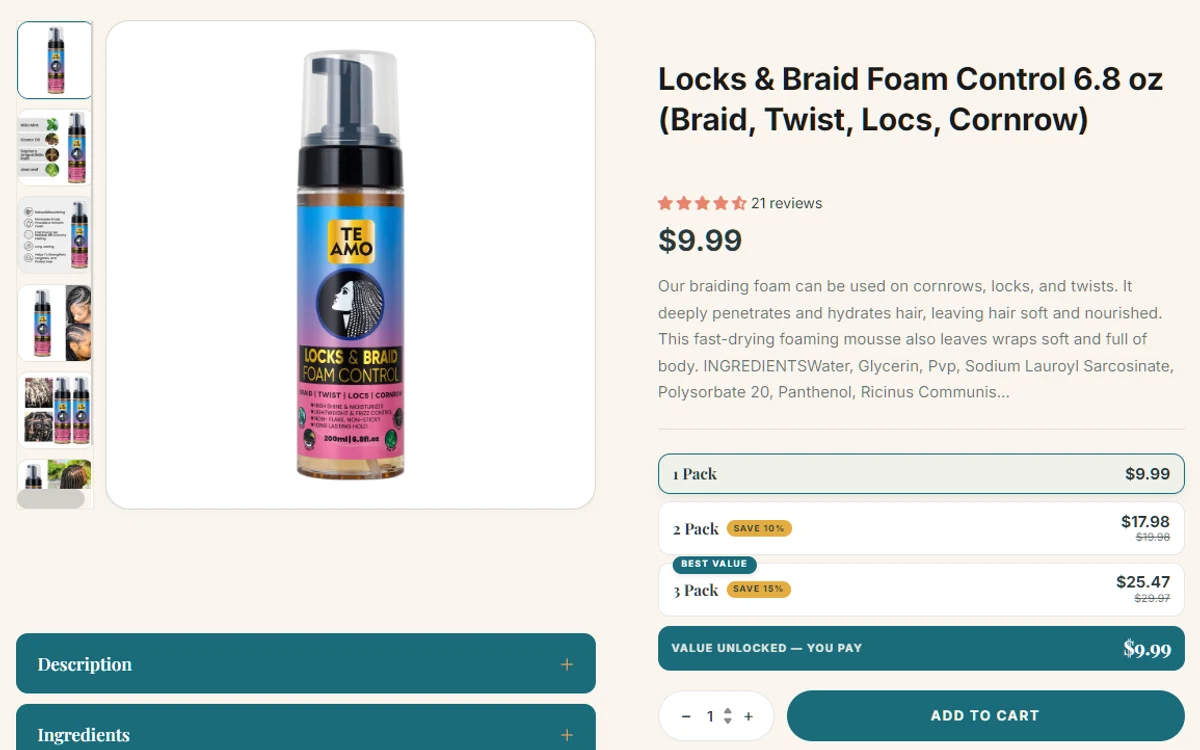 Hair and skin careTe Amo Supply(opens in a new tab)Web design and development for a plant-based hair and skin care brand, with a Request a Quote page and high-converting product pages.
What Merchants Say About Our Shopify Apps
Real reviews from the Shopify App Store. They cover our apps.
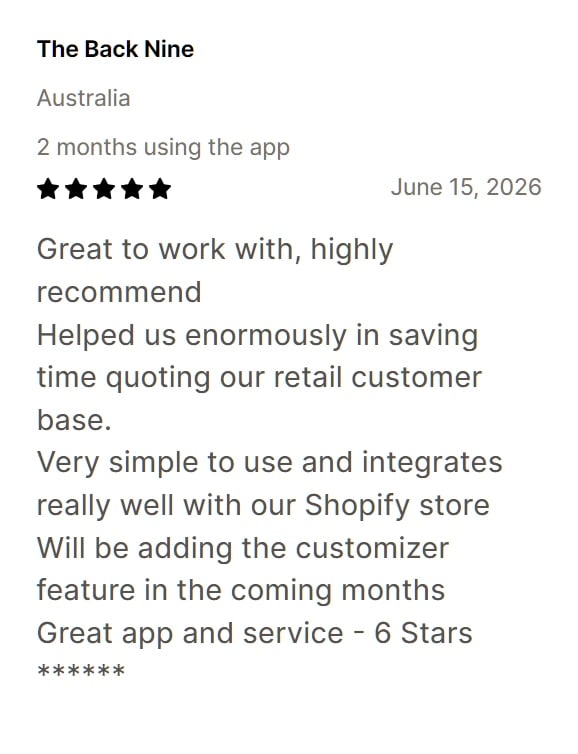
Review of Add to Quote 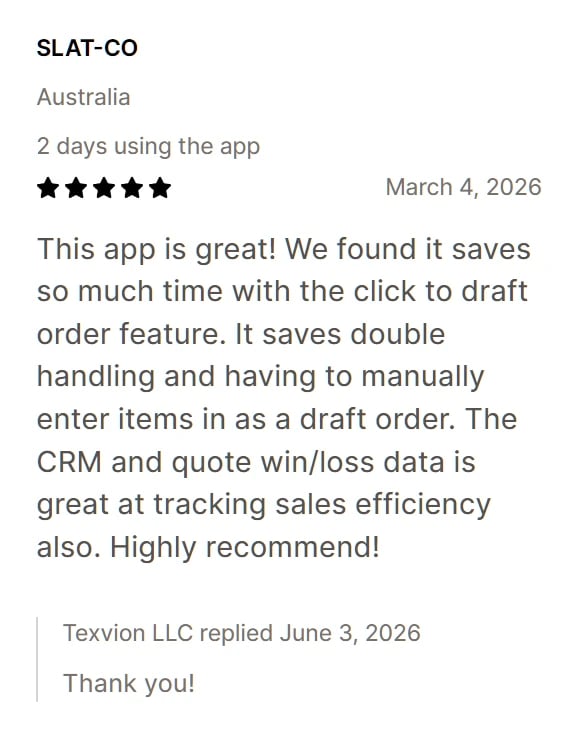
Review of Add to Quote 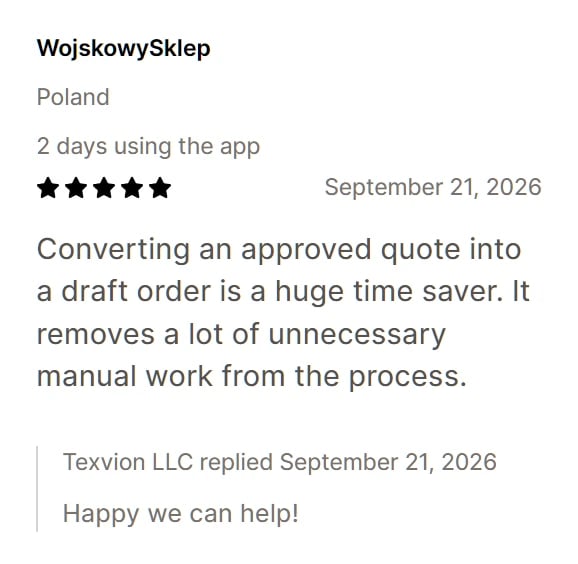
Review of Simple Request a Quote
Frequently Asked Questions
Related Shopify Services
- Salesforce Commerce Cloud to ShopifyPlan a move from Salesforce Commerce Cloud to Shopify Plus, cartridges and all.
- Shopify Salesforce IntegrationGive sales and service teams Shopify customer and order data inside Salesforce.
- Shopify Plus vs Adobe CommerceHosted simplicity against deep code control. A fair look at when each one wins.
Shopify is a trademark of Shopify Inc. Texvion is an independent company and is not affiliated with or endorsed by Shopify Inc.